Germany — Stabilized Camera Work Doesn't Kill Action, It Exposes Weak Choreography
- STUNT.BLOG, supervised by stunt coordinator Ferdi Fischer, says stable camera work does not kill action.
- Camera shake hides thin choreography, soft contact and bad timing, so stable shots show the real work.
- An operator watching a monitor runs 350 to 500 milliseconds behind the performer.
Posted: August 20, 2026
A new analysis piece from STUNT.BLOG — the editorial desk of Stuttgart-based action outfit SlamArtist.com, supervised by stunt coordinator and action director Ferdi Fischer — takes on a note coordinators hear constantly: that stabilized camera work makes a fight feel dead. The argument is the reverse. Stabilization does not drain energy out of a sequence; it removes the shake that was hiding thin choreography, soft contact or bad timing, and what is left on screen is whatever the stunt team actually built.
Three working ideas are worth pulling out. First, “biological breathing” — a stabilized move still needs organic displacement and responsive timing rather than a mathematically even path, or it reads as machinery. Second, energy matching: the camera's direction, velocity and acceleration should be designed against the action, traveling with a performer's impact instead of substituting random vibration for intensity. Third, and most practical on the day, operator anticipation — an operator reacting to a monitor is running 350 to 500 milliseconds behind the performer, which is enough to lose a fast beat entirely, so the operator has to know the choreography cold before the take.
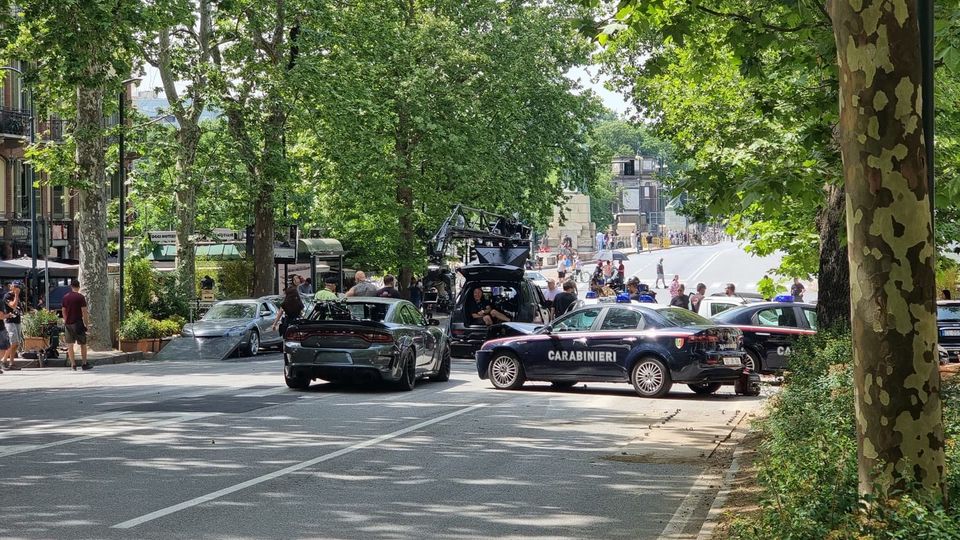
The piece works through Fast X's Rome sequences, Bad Boys for Life, the 21 Bridges subway chase, and — as counterexamples of over-determined camera paths — The Gray Man and The Revenant. The summary line: “The camera should either match the energy of the scene or deliberately oppose it for a precise narrative reason. Anything in between is not intensity. It is loss of control.”
Source: STUNT.BLOG — Why Perfectly Stable Action Can Feel Dead
Learn more on IMDb: Ferdi Fischer