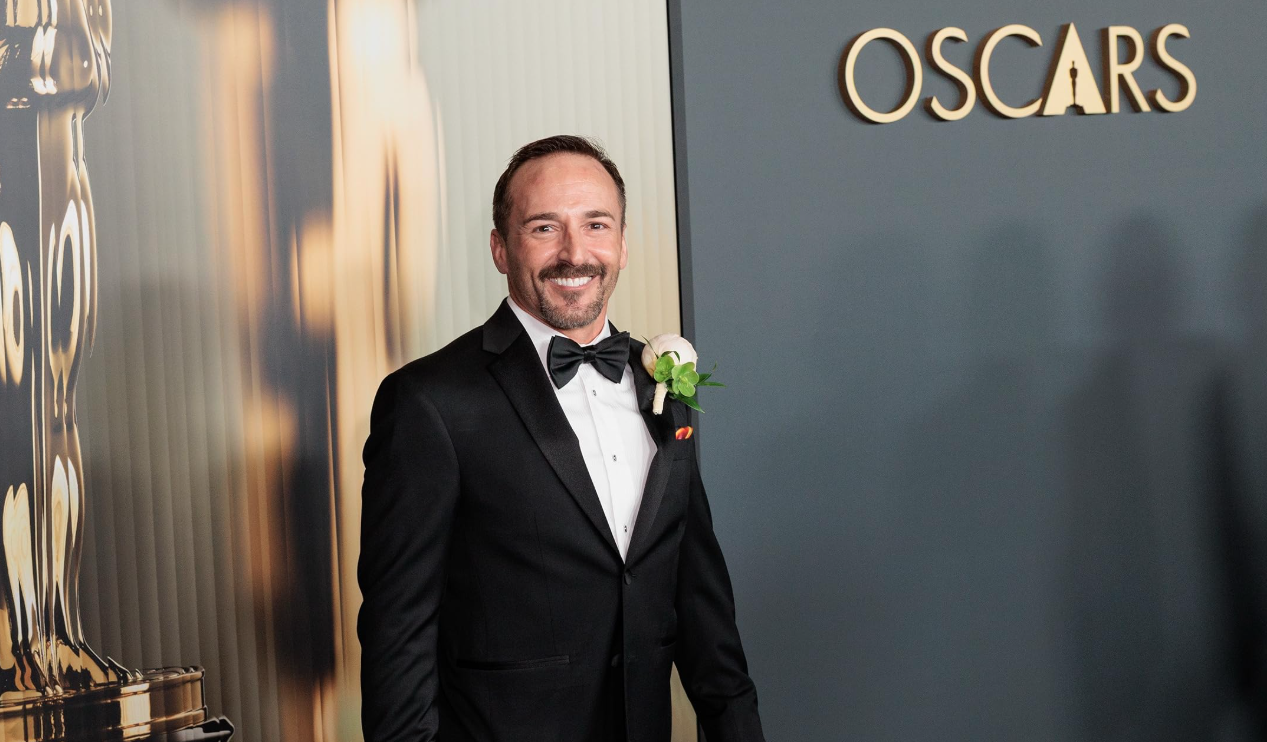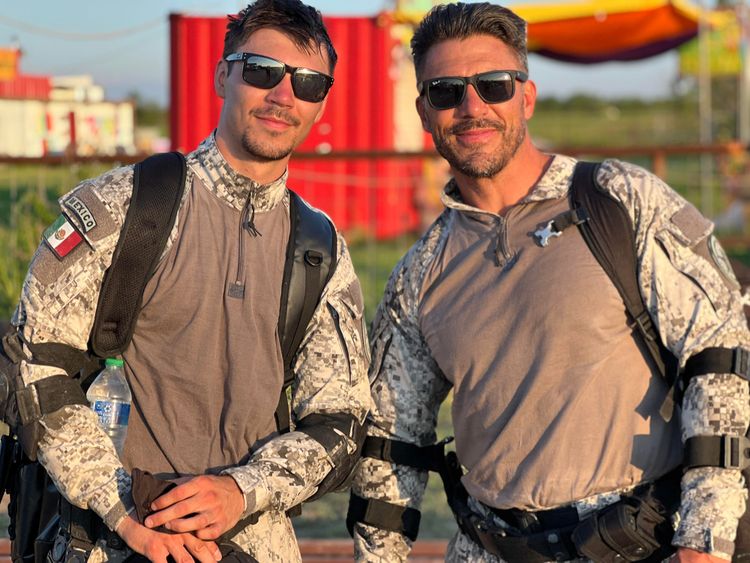
Coordinator Corner: Jayson Dumenigo
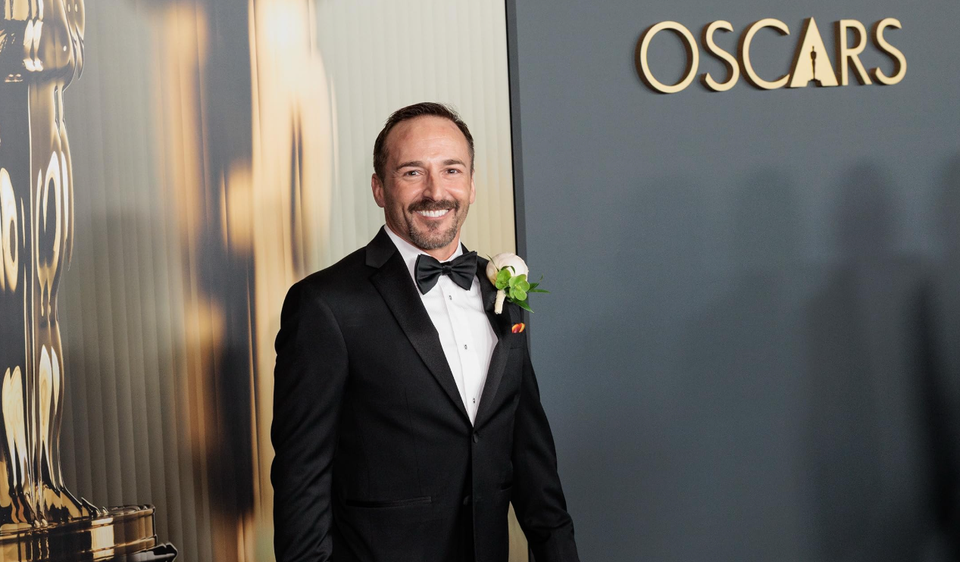
We sat down with Jayson (before he added his second Taurus Award to the shelf) to talk shop. Career beginnings, gut instincts, and at least one story involving Ted Danson's hamstring. Read on. Edited for clarity and length — full conversation on the StuntListing YouTube channel.
What would you say launched your career?
It was an accumulation of things, to be honest — there wasn't one thing that launched my career. The first stability I had was Malcolm in the Middle. Bobby Porter was the stunt coordinator and I ended up doubling about 30 episodes. I doubled Reese, I doubled Frankie, there's even an episode I think I doubled Dewey — driving or something. He had me do everything, and at that point I didn't have any sort of resume. He took a chance on me. I just happened to be the right size for the character, and that gave me a good foundation that kind of sent me to the next level.
The first feature I did was Planet of the Apes — the 2001 version, the Mark Wahlberg version — for Charlie Croughwell. They needed apes to run around and I happen to be good at running around on all fours. I'm kind of built like an ape, and I made a career out of that for a few months.
But before that I was living in my truck. I didn't know what I was gonna do. I have a story that I tell everybody — I had a can of refried beans in my cabinet in the back of the truck. The way that came about is my dad said I had to go to college or pay rent. I wasn't gonna do either of those, so he said, "Get used to having a hard life." So I went out and did live shows and slept in my truck in the parking structures during rehearsals because I didn't really have that much money to have my own place, and I didn't want to just pay rent arbitrarily while I was trying to figure things out.
I had paid my truck payment and my insurance payment and I had no money left — like $12. I went to the 99 cent store, they have a food section, and I bought some of the random things that were there for $12 — a week's worth of food. I wasn't a big fan of refried beans then, I like them now, but I had eaten everything and I had one can left. That was basically the last day before I had to crawl back home, go to college, and do the 9 to 5 — you know, what most parents want their kids to do.
And then I got a call from Charlie Croughwell to go on Planet of the Apes. Because I didn't have a house, I had such little overhead. I had a Chevy S10 — I bought it because Shawn Graham, veteran stuntman, was selling it. It was like a campaign, so I was all into it. I went on location and I barely had any sort of a bank account. It was an extended cab, and all of my checks went in the back. That show is what made me able to afford a place to live and kind of continue my career. After that it kind of took off.
Was there a job or a time on set when you were truly scared — either as a performer or as a coordinator?
I have a story that sticks out. This goes back to around 1999, 2000. There was a commercial where I was doubling Paul Hamm — he was an Olympic gymnast — and he was supposed to do a handstand on the fifth floor of an apartment building, peel off, do all of these flips, and then land on the ground. I was on a descender and I had this feeling like there was something that was gonna go awry. It was a really bad feeling.
Lane Leavitt was rigging it, so it was totally safe — he's a sharp guy, a good rigger. But I just had this bad sinking feeling. It was early on in my career, so I was like, I'm just gonna do this thing. There are no pads, there's nothing — just one wire and you're doing all these flips, and if something didn't work out it was gonna be a bad deal. But it all worked out and it was fine.
The very next day, same commercial, they were doing driving shots for a Chevy commercial — Eddie Braun was running it — and the helicopter crashed with Eddie, the cameraman, and the pilot. Everybody walked away. I think the cameraman broke his arm or his leg or something, but it was just one of those moments. It's really rare — there's only a couple of other times that I've had that feeling and then something has happened. Follow your gut. Be super cautious when you're going into something. That moment sticks out.
There was another moment on Man from Toronto. We were doing all this really big camera work — flying performers and camera, handheld — and I showed up and had this really gnarly feeling. I couldn't figure out what it was. I double checked everything.
Phil Silvera was the second unit director and also operating camera. They were jumping off of a platform about 70 feet up, doing this really big swing with camera following a performer. He pushed out just a little more than he was originally intending to push out — he wanted to get just a little bit more of a profile, so he pushed out a little bit harder — but it ended up being more than he had anticipated. That put him directly in the path of a table they had as set dressing.
So I run over and I get between him and the camera because now he's coming in for landing, and it's all gravity based — these are accelerators, the ground is the finish, there's no stopping it. He comes swinging in and hits me, we hit the table. And to this day I don't know why, but it was made of metal. I've not seen a banquet table made of metal since — they're always plastic or something. My arm got between him and the metal and I stopped him. I think it broke my arm because I was not able to move. I never went and got an X-ray, but I couldn't grab, I couldn't hold — and I don't bruise very easy, but I had this nasty bruise that went down to my elbow. That took me out for being able to use that arm for a couple of weeks.
Follow your gut. Keep your head on a swivel, especially if you have that feeling in your stomach.
Do you have a stunt story that sounds made up but is actually legitimate?
Yeah. There are a lot of moments like this — the longer you're in the business, you have all of these very odd situations where you're thinking, I can't believe this is really happening.
I have a Johnny Depp story and a Ted Danson story. With Ted Danson — I was coordinating a pilot and it was just tickles and tackles, mostly babysitting. We had some people running and falling down during a marathon sequence. I got wrapped and was driving home when my phone started blowing up. A producer called saying Ted had pulled his hamstring. I started my career in circus, so as far as physical therapy and getting a performer to the point where they can limp through a show — there are little tricks and things. The producer knew I had that background and called me back. He said, "You gotta fix him, you gotta figure it out." The whole pilot was based on him winning this marathon and crossing the finish line — confetti cannons, the whole deal — and he couldn't even walk, much less run.
So I drive back to set, go meet him in his trailer, and the guy can't move — poor guy. There's a little trick you can do to stretch out your groin muscle and hamstring. So I find myself in the trailer — feet to ankle, doing the splits on the ground with Ted Danson — my hand on his knee and my fist in his mid-thigh trying to stretch that muscle out. His assistant gets called away to go get an ice pack or something, and now it's just me and Ted Danson doing the splits in his trailer. I remember thinking — this is not real. I'm in here rubbing Ted Danson's thigh in his trailer. That is about as weird as it gets.
The other one was with Johnny Depp on Pirates 4. There's a scene where Johnny's character has a rope, throws it around a palm tree, and inches his way up trying to escape. I'm smaller, so I was one of the riggers. There's a palm grove and it's a wide shot — cameras on a long lens far away — and it is literally just Johnny and me in this palm grove, just chatting like normal. John is a really nice guy.
Then we get the call — get him up there, we're gonna start inching him up. I have to hand-pull him up through a compounded rigging system, but it can't be a locking system or it looks unnatural. So it's all by hand. I'm laying down hiding behind this little bush they created to make it look inconspicuous. And I realize — when he's like 25 feet up on my line — this is one of those moments where if I had a heart attack right now, or sweaty hands or something, and Johnny came out of that tree, it would be heard around the world. This was at the peak of his fame. It is really just me and Johnny in the middle of Hawaii in some sort of palm grove with a rope — that you hope. I had all the confidence in the world, I knew I could do it, but there's still that little voice saying, hey, what if this thing goes south.
What would you say your first big success in stunts was?
Slamming my face into an ice cream truck.
My background is that I did live shows from fifteen and a half to about 19 — like a Cirque du Soleil type show, it wasn't Cirque du Soleil but it was that type of show. Then I did the Disney circuit. But during the circus time, I got my SAG card at 17. I jumped off the Santa Monica Pier for Bob Minor for a commercial that actually never aired because they didn't want kids jumping off the Santa Monica Pier. So I'm one of the few people that jumped off the Santa Monica Pier and didn't get arrested. I was 17, got my SAG card, but really nothing happened and I had to go back to high school.
I didn't have much of a resume — I think Jeff Pruitt hired me once on Buffy the Vampire Slayer, so I had like one or two credits. Then Bobby Porter saw that I was the right size, I went in and met with them to double Reese, and it was my very first day on the show.
Reese gets mad at an ice cream truck and has to run into it face-first — head down, like a goat butting into something. He rears back and runs headlong face-first into this ice cream truck. There were no pads on it, it was a practical truck. I think they expected me to throw a hand up or do something, but I went for it and smashed my face into that truck. I think I actually rocked that truck practically — they didn't have to do it with effects. Bobby was like, "That's my guy." From that point on I doubled basically all the kids on Malcolm in the Middle for Bobby Porter. Bobby also doubled Dewey and Frankie himself because he was that size as well.
And that led to some of the very first professional rigging rental of pads — Bobby said we need pads, so I started buying pads. I was already working on the show, and one of my first ratchets on a TV show was on Malcolm in the Middle. That one moment of just really committing — slamming my face into that ice cream truck — is what started my career with a good foundation.
The transition from performer to Action Factory — was that a natural progression or something you planned?
It was a plan. I wanted to do stunts since I was eight. When I was a kid growing up I met Mr. T, and Mr. T said, "Oh, you wanna be a stuntman?" and it stayed with me since I was eight. In high school I got more and more into business — understanding sales, retail, branding, all these things — and I knew I wanted to have a company, but I was gonna be a stuntman first.
As my career as a stunt individual became more established, I had the luxury of also being able to build the business slowly. With Clint Lilley early on — he took me under his wing — when I would buy a pad or some rigging gear, I built it slowly. The intention was always to build a legitimate company.
The Action Factory logo and everything started in high school. When I was maybe 19 or 20 — and the internet was still kind of this fresh new world, that's how old I am — Action Factory came to be because of LA 4-1-1. I don't even know if they're around anymore, but everybody that was established had an ad in LA 4-1-1, which was like this industry book — not just stunts, but catering, grips, all this stuff. If you didn't have a lot of money, the workaround to get on the first page was alphabetical order. You could pay to get above that as a premium thing, but I didn't have any money. So I thought, Action — A, OK perfect. How do we make it flow? Factory. That's all we're doing — stunts.
As the internet progressed and LA 4-1-1 switched over, if you searched "Action Factory stunts," all of those descriptions fit perfectly as searchable items. So Action Factory kind of out of necessity and planning a strategy got its name from that, and then the company expanded from there. The money that came in went right back into research and development — it was never distributed, it was always to build better products so we could have an edge as a company, but also to make our community safer. I think we've accomplished that, so I'm pretty jazzed. Maybe it helped, maybe it didn't — I would like to think that it did.
What mistake taught you the most in your career?
There are many — some of them are bigger than others. One that stands out involves engineers. In our business, what we do is accentuated by engineering, however book smarts and time in — street smarts — they are a little different. I'm not saying disregard the engineers, that's not what I'm saying at all. What I'm saying is that just because you have a stamp doesn't necessarily mean it's the final word. I have two examples — a rigging story and a driving story.
We manufacture our own ratchet straps, so I know a lot about webbing and those types of things. We were working a job in New York where a performer was going to jump off the open door of a cherry picker lift and camera was going to follow them — a handheld tracking shot. We were going to build a platform out of speed rail and 2-inch ratchet straps, which is completely strong. The engineer said no, it had to be done with three bolts to specific specs. There was definitely an increase in the safety factor, but this is where book smarts and just time in matters — the bolts that they had called for were going to protrude ever so slightly. We had a limit line that was going to end up dragging off the platform behind the camera, and I was concerned about those bolts snagging it.
I made the argument that we should use the ratchet straps — keep everything flat, tape it down, nothing to grab or snag. He has an overhead line anyway, so if something happened he's not going anywhere. But they insisted. I think it was a little bit of an ego thing — I'm the one with the degree, you're the stunt guy, do as I say. I don't have a stamp, so we went with the three bolts.
I even put another man in the basket specifically to watch that trailing line, because I had a gut feeling that something wasn't right. We did it several times with no problem. On about the sixth take — dead stop. Performer goes off, camera jumps, and within five feet of leaving the platform it's a full dead stop, swing underneath the basket.
Now this is on an open New York street, right after there was an issue where one of the grip brothers had fallen at Radford and passed away — it wasn't our show, but it was the same studio — and so there was a lot of scrutiny on production. We had all these eyeballs, all these camera phones, a guy hanging in the air. The person in the basket wanted to just pull the line off and let him drop down, but there was a fence and lighting in the way. I got on the radio very calmly and said — don't let him go. Let's lock him in place, bring it down, and find out exactly what happened. That's exactly what we did. No one even knew there was a real problem, other than the first little shock load and the swing — it was handled so smoothly that the general public viewing it never saw what was going on, it never made the media. We brought it down and sure enough — about a sixteenth of an inch of a raised bolt had caught the edge of the tech that was trailing and stopped it completely.
Don't just go with the flow. Question it. Take your own expertise, your time in — and the disclaimer is, don't disregard the engineers. Collaborate together, eye to eye, instead of butting heads.
The second story was a car jump in Philadelphia. An engineer had run calculations saying the truck was going to land nose-first into the K-rail and the person driving it might not make it. Now this is kind of cool because it has these old-school guys who all they do is jump cars — and I'm not gonna say any names — but they just jump cars, they know exactly where these cars are gonna go. It's a plate shot — K-rails built up with dirt, a 20 or 30-foot gap, another K-rail with a dirt ramp on the inside. Big open parking lot, cameras low, a truck goes flying through the sky. That's all we're gonna capture.
There was a big pushback — this truck is gonna end up with its nose right in the other K-rail and the driver might not make it. It was kind of another ego type thing. A lot of conversation back and forth, a third party got involved as a mediator, and ultimately they put in some bales to soften the blow in case it didn't make it. They did the stunt and it landed exactly where the car guys said it would.
After the fact there was another evaluation. The truck was a 4x4 Dodge Ram V8. The old-school car guys couldn't explain it in technical terms, and the engineer didn't have the experience on set doing it. What the numbers never calculated was the weight of the truck — because these older guys just saw the truck, they know how it flies. The weight of it being a 4x4 loads the engine weight, so at the angle they picked, the suspension compresses in such a way that the engine actually rebounds and becomes the leading weight, dragging the truck further than the numbers suggested at that particular speed. Book smart versus street smart — they didn't line up. But it made me realize: it's good to have all the numbers, but time in really does matter. Work in conjunction, eye to eye, instead of butting heads.
Is there a lesson or mistake that stays with you — something you take to every set?
On a personal level — always keep a little discreet stunt bag. Something you always bring to set. Especially as you get more time in, you don't want to wear all your pads all the time — you're bulky, uncomfortable, hot, sweaty, itchy, whatever it is. And this is coming from a guy who has a company that builds pads. Keep a little drawstring bag with just a couple of pads in it — I don't care if it's cut pieces of yoga mat, incolite, or honestly bubble wrap. Keep it close by, hide it so it's all blacked out and the camera can't see it, and if you ever need it you can just slip it in.
And always bring a mouthguard. If you have a choice between an elbow pad and a mouthguard, bring the mouthguard. That's one thing a lot of people don't talk about — a lot of what we do, whether it's fighting or falling or hitting the ground, your teeth kind of smash onto each other from the clinching of the jaw. It's just like grinding your teeth at night. What you end up doing is cracking your teeth and becoming more prone to cavities. I know that seems like a really random thing to bring up, but I went to the dentist and he said it seemed like I was grinding at night. I was like, how is that possible — I brush my teeth three or four times a day, I use mouthwash, my hygiene is high up on the list for me. He's like, it seems like you're grinding at night. I knew I wasn't grinding at night, and we traced it back to the work. A lot of other people I've talked to have had the same thing. It's just one of those random things you don't think about. I can guarantee you're not gonna have any other conversations about it, but it's one of those things — we just don't think about it.
Any final words of advice for performers trying to get into the business, or anyone going through hard times?
Imagination creates reality. I know that sounds a little cliche, but if you can hold it in your mind, you can hold it in your hand. Don't give up. If you really want to be a part of this business and you really want to be successful, even during the hardest times where most people give up — don't give up. Surround yourself with positive people and you will be able to accomplish exactly what you're looking to do. Say it to yourself, think it, write it down every day, put it up as a visual — like an image board. If you do that and you don't give up on your dream, you'll make it. Those are for the people that are just starting out, or maybe the people going through some hard times. And failure is key — it's okay to fail. As long as everybody gets to go home. No one wants to go to the hospital or worse, but failure is okay. Learn from the mistakes.
Want to watch the full interview? Hit the button below — and don't forget to like, follow, and subscribe to the StuntListing YouTube Channel.