
Jon Valera Built a Different Martial Art for Every “Street Fighter” Fighter — and Threw Out the Clean ’90s Look

- Jon Valera choreographed the fights and directed second unit on “Street Fighter.”
- He gave each character its own martial art instead of one house style across the picture.
- He wanted gritty, messy contact rather than the clean martial arts of ’90s action films.
Posted: October 10, 2026
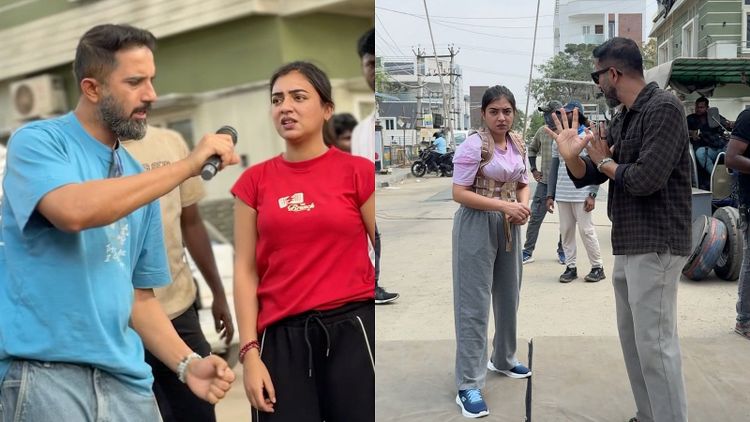
Jon Valera, the Filipino-American fight choreographer and second unit director on Street Fighter, told Philstar on October 10 that his first instinct was wrong. He wanted clean, Matrix-grammar martial arts. He ended up somewhere else: brutal, gritty and messy, closer to the John Wick register. The irony is that the picture is set in the ’90s and he specifically did not want ’90s screen-fighting — the cheese, as he puts it — which means the period setting is carried by production design while the contact is cut to a contemporary standard.
The department's base was Japanese: Goju-ryu, Shotokan and Judo, studied as a common grammar and then flared outward per character. That is the choreographic decision with the real cost attached, because it means separate vocabularies to build, cast and rehearse rather than one reusable house style — Blanka animalistic with capoeira flair, Chun-Li out of Wu Shu, Tai Chi and Kung fu, Guile heavy and built on big hits, Dhalsim yoga-based with a movement quality closer to breakdancing, and Balrog modelled on Mike Tyson. Every one of those needs a performer or double who can actually carry that discipline at speed and repeat it across coverage.
Valera says the picture leaned on specialists beyond the stunt bench: one stuntman came out of Cirque du Soleil and worked on purpose-built harnesses and rigs for the material that could not be done off the floor. Where practical performance ran out — explosions and breakaways — Sandra Balej's visual effects team took it, with the handoffs safety tested rather than assumed. Valera calls the sequences among the most collaborative work of his career, specifically naming the VFX side, which in practice means the choreography was designed knowing which beats would be finished elsewhere.
The scale number comes from Orville Peck, who plays Vega: the film's longest fight, the burlesque sequence, took roughly two weeks to shoot with dozens of extras, performers flying through the air and timed pyrotechnics. Two weeks on one sequence is a rigging, reset and pyro-timing problem before it is a choreography one. Kitao Sakurai directs; the film opens in Philippine cinemas October 14.
A second interview, given to Inquirer Entertainment on October 9, fills in the bench. Valera assembled the stunt team internationally — performers out of the UK, France, New Zealand, Australia, Canada and Japan — which on a picture carrying a separate discipline per character is the practical way to find people who already own the vocabulary rather than training it from scratch. The Cirque du Soleil performer is attached specifically to the Spinning Bird Kick, on harnesses and rigs built to hold the performer airborne slightly longer than a body otherwise would; Valera’s framing is that these fighters sit just past ordinary human ability rather than in superhero territory, which sets the ceiling the rigging has to hit and no higher. The two interviews describe the intended register differently — Philstar’s gritty and messy against Inquirer’s clean, classic martial arts true to each character’s style — so the stylistic read is unsettled; the department detail is the solid part.
Source: Philstar — Fil-Am stunt choreographer breaks down ‘Street Fighter’ action · Inquirer Entertainment — Filipino-American stunt choreographer brings ‘Street Fighter’ moves to life
Learn more on IMDb: Street Fighter (2026) · Jon Valera