Clayton Barber Started Teaching His Ali to Fight for Camera 15 Minutes After Meeting Him
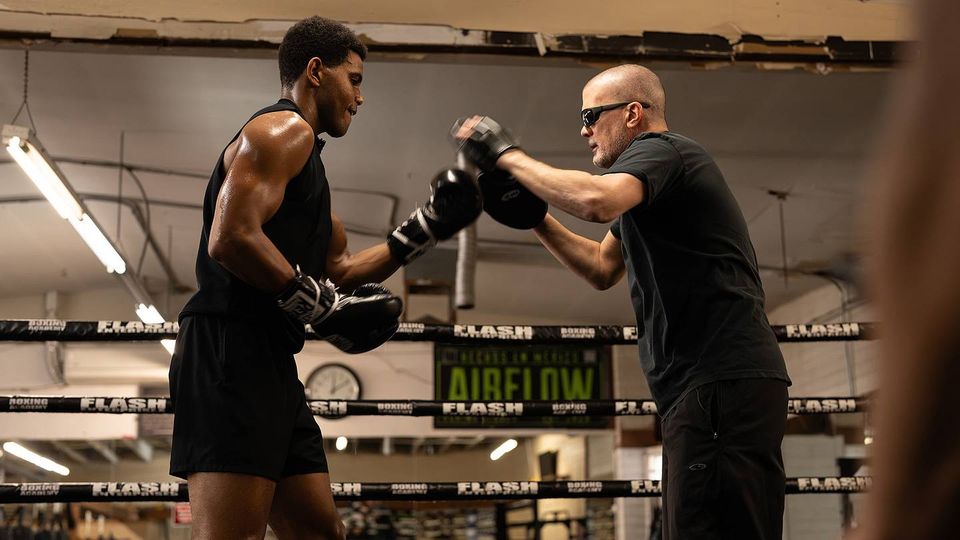
- Clayton Barber was the supervising stunt coordinator on “The Greatest,” the Muhammad Ali series arriving on Prime Video on November 4.
- He says he began teaching lead actor Jaalen Best to fight for camera within 15 minutes of meeting him.
- He built Ali’s boxing from raw early fights up to the 1964 Sonny Liston bout, changing the style as the career changed.
Posted: October 26, 2026
Fight work for a boxing picture is a casting problem before it is a choreography problem, and Barber’s account of “The Greatest” starts with what the lead brought through the door. Jaalen Best had put in close to a year of preparation before the shoot, which meant Barber could skip the part of the job that usually eats the schedule — teaching somebody to look like a boxer — and start on the part that actually gets used. He puts the hand-off at about 15 minutes: that was how long it took before the work moved from boxing to fighting for film, which is a different skill with a different target. The camera, not the opponent, is what the punch has to land for.
Barber’s way into the choreography is rhythm. He compares boxing to dance, and says the same partner-based movement runs through salsa and through fencing; what separates it is that the punches can actually do damage, which is the line every fight coordinator works along. He calls the result a “violent ballet,” and treats the exchanges as storytelling whether the characters are punching, kicking or carrying weapons — the fight is dialogue, not filler between scenes.
The craft problem specific to this job is that a real fighter’s style is not fixed. Barber designed the young Ali as raw and built forward to the Liston fight, by which point the man had put on weight and changed how he moved. That means a coordinator has to choreograph a progression an audience can read across episodes, not a house style applied evenly. The Henry Cooper left hook gets staged on the same principle: Barber frames the knockdown as a momentary lapse in concentration, which is what makes it legible on camera and ties it to the hands-down guard Ali carried. A punch that lands because a fighter stopped paying attention plays; a punch that lands because the choreography said so does not.
He puts the last takes of the Liston fight at the top of his boxing work — the point where the performers stopped pacing themselves and the emotional beat arrived with the physical one.
Learn more on IMDb: The Greatest (2026) · Clayton J. Barber