Behind “Tom Cruise Does His Own Stunts”: Wade Eastwood’s Department, 52 Named Performers and the Rigging the Camera Never Shows
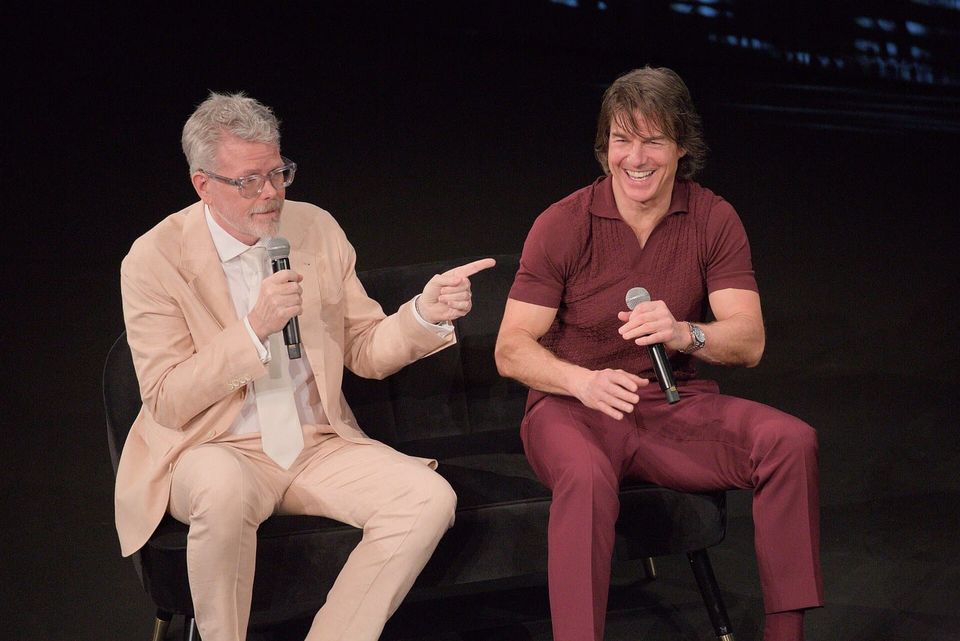
- STUNT.BLOG traced the department behind the stunts usually credited to Tom Cruise alone.
- Wade Eastwood ran second unit and stunt coordination; 52 professionals were named in the ensemble.
- Most of the visual effects work removed safety pilots, wires and ramps from the frame.
Posted: September 1, 2026
STUNT.BLOG has run the credits on the phrase the trade press repeats every press cycle, and the argument is one every coordinator will recognise: Cruise performs the visible action, but a department makes it — designs it, tests it, rigs it, flies it, photographs it, protects it and finishes it. The piece breaks the pipeline into eight linked stages — story and performance, stunt design, training and doubles, rigging and practical effects, pilots and vehicles, camera and second unit, safety and approvals, and VFX and editorial finishing — and names the people who sit in them: Wade Eastwood on second-unit direction and stunt coordination, Jon DeVore coordinating the skydiving, Ruda Vrba on fight coordination, Scott Armstrong as assistant stunt coordinator, Alex Wuttke supervising VFX on The Final Reckoning. The film’s winning ensemble at the 2026 Actor Awards runs to 52 named professionals, and that list still leaves out much of the aerial, camera, safety and VFX workforce.
The sequence breakdowns are the useful part for anyone building a similar package. The Stearman biplane exterior needed reinforced wings, rebuilt engines, compact hard-mounted cameras, a mechanics crew, a pursuit aircraft, safety rigging, and a green-suited pilot in frame whose image came out in post. The Helsetkopen motorcycle release ran on roughly a year of preparation — a reported 500-plus skydives and 13,000 motocross jumps — plus a purpose-built ramp that ILM then removed while adjusting the surrounding terrain. The submarine work combined a practical rotating set, water and safety teams, digital particulates, and CG torpedoes where the practical drops were judged unsafe.
The piece is also a clean rebuttal to the practical-versus-digital framing that keeps getting used against stunt departments. Roughly 4,000 VFX shots on The Final Reckoning do not cancel the practical performance; the digital work mostly deletes the apparatus — the safety pilot, the wires, the ramp — so the performance stays visible without the controls being visible with it. Safety gets the same treatment: rehearsal, tested mounts, communications discipline and a named authority to stop are framed not as friction but as the decisions that determine which angle can exist at all, and whether there is a second take. The timing is not incidental. Eastwood took the inaugural Critics Choice Award for Best Stunt Design in January 2026, and the Academy’s Achievement in Stunt Design award becomes eligible with the 2027 release year — an award that will be voted on attributable, department-level credit, which is exactly what the shorthand erases.
Source: STUNT.BLOG — Tom Cruise Does His Own Stunts. The Credits Tell a Bigger Story
Learn more on IMDb: Mission: Impossible - The Final Reckoning (2025) · Wade Eastwood